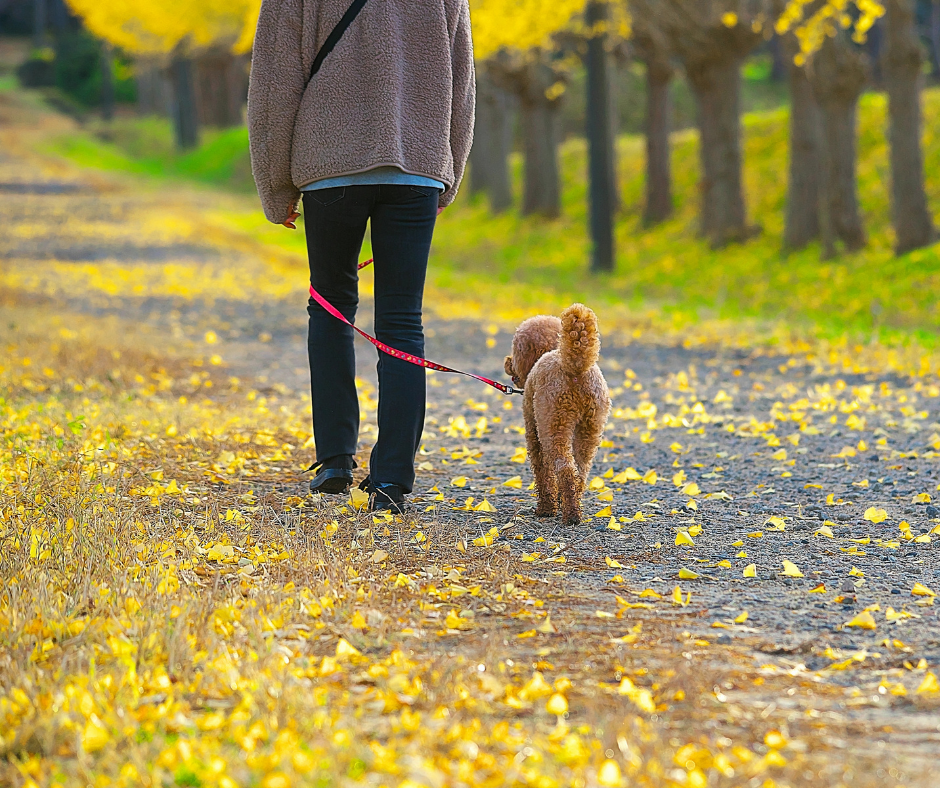
As September brings slightly cooler mornings to The Woodlands, Texas, many dog owners are ready to spend more time outside again. After months of limiting activity because of summer heat, longer walks, trail outings, and extra playtime can feel like a welcome change. Dogs are often just as excited to get moving.
But jumping back into a full exercise routine too quickly can lead to soreness, paw irritation, or joint strain. At Forest Crossing Animal Hospital, we encourage families to treat fall activity as a gradual transition rather than an instant return to long-distance walks. With smart conditioning, attention to hydration, and a little extra care for joints and paws, your dog can safely build strength and enjoy the season.
Build Endurance Gradually
Even if your dog used to handle long walks easily, months of reduced activity can affect stamina and muscle tone. Starting with a shorter route and slowly adding time or distance gives the body a chance to adapt.
A good approach is to increase one part of the routine at a time. You might add a few minutes to each walk, include a small hill, or introduce a slightly faster pace once your dog is comfortable. Avoid making every outing longer and more intense all at once.
Watch your dog during the walk and afterward. Falling behind, stopping frequently, heavy panting, or reluctance to continue can all be signs that the pace is too much. Puppies, senior dogs, overweight pets, and brachycephalic breeds may need shorter, slower sessions.
Helpful fall conditioning habits include:
- start with manageable walks and increase gradually
- include rest days after more active outings
- avoid sudden bursts of intense running
- let your dog set the pace when possible
The goal is consistency, not exhaustion. Regular moderate activity is often safer than occasional very long adventures.
Pay Attention to Joints and Mobility
Cooler weather can make activity more enjoyable, but it can also make stiffness easier to notice in some dogs. Pets with arthritis, previous injuries, or age-related mobility changes may seem excited at the beginning of a walk and sore later that evening or the next morning.
Look for subtle signs such as hesitating before jumping into the car, taking stairs more slowly, favoring one leg, or needing extra time to stand after resting. Some dogs simply become quieter after activity rather than showing an obvious limp.
If your dog already has a joint condition, do not increase exercise without considering their comfort level. Forest Crossing Animal Hospital can help review mobility, body condition, and chronic medications to determine what kind of activity is appropriate. For many dogs, steady low-impact exercise supports joint health, but the amount and intensity should match the individual pet.
Protect Paws and Keep Water Handy
Fall walks may feel cooler, but paw care is still important. Sidewalks and pavement can remain warm in Texas, and rough trails may expose paws to gravel, burrs, sticks, or other debris. Check your dog’s feet after longer outings, especially between the toes and around the pads.
Watch for redness, cracked pads, swelling, licking, or limping. If your dog suddenly refuses to continue walking, stop and check the paws before assuming they are simply tired.
Hydration matters too. Dogs still lose water through panting, especially during longer walks or humid afternoons. Bring water on extended outings and offer it during breaks instead of waiting until your dog appears very thirsty. Even in September, avoid the hottest part of the day. Early mornings and evenings are often more comfortable in The Woodlands and can reduce both heat and pavement risk.
Balance Exercise, Weight, and Recovery
Fall is a great time to review your dog’s weight as activity begins to increase. Extra weight can place more stress on joints, make exercise harder, and increase fatigue. Dogs who have been less active during the summer may also need time before their stamina returns.
Do not assume that more exercise means your dog automatically needs more food. Treats given during walks, training, or weekend outings can add up quickly. Your veterinarian can help determine whether your dog is in a healthy body condition and whether portions should be adjusted.
Just as important is watching how your dog feels after activity. Some dogs seem fine while they are excited and moving, then show stiffness once they cool down. Limping, reluctance to climb stairs, slower movement, sensitivity when touched, or avoiding normal activities can all signal soreness.
Mild tiredness after a longer outing may be expected, but ongoing pain or a noticeable limp deserves attention. Forest Crossing Animal Hospital can help determine whether your dog simply did too much too soon or whether an underlying joint, muscle, or paw issue needs treatment.
Enjoy Fall Walks with a Safe, Steady Plan
Cooler days are a great reason to get outside and enjoy more time with your dog, but the safest fall routines are built gradually. By increasing exercise slowly, watching joint comfort, protecting paws, keeping water available, and paying attention to post-walk soreness, you can help your dog rebuild stamina without overdoing it.
If your dog has been less active over the summer, is carrying extra weight, seems stiff after walks, or has a history of joint problems, Forest Crossing Animal Hospital is here to help. Call us today or request an appointment online to schedule a wellness or mobility check and make sure your dog is ready to enjoy longer fall walks safely in The Woodlands, Texas.